 Overland Park French Drains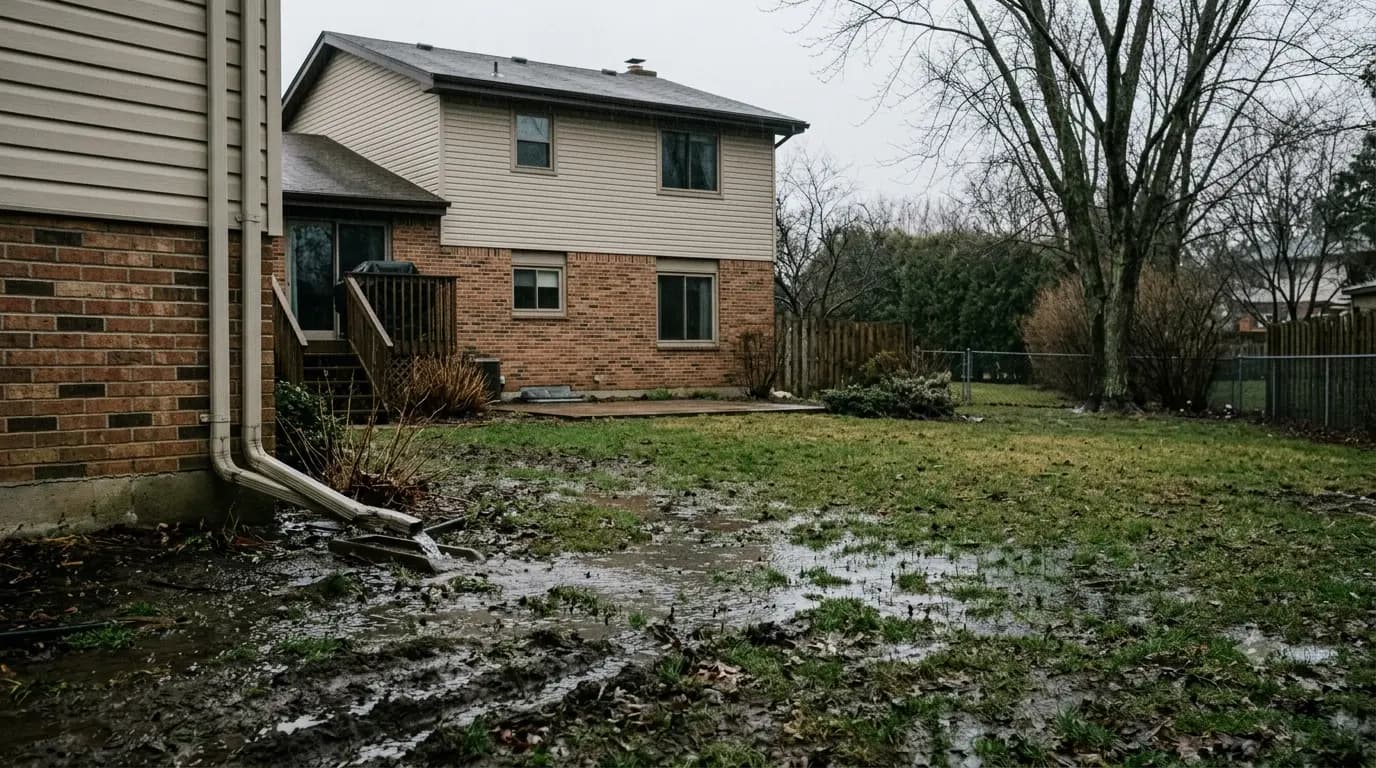
Yard Drainage in Overland Park, KS
Standing water in the same spot every storm, a lawn that squishes when you walk it, a strip of yard you can't mow without leaving ruts. Sometimes the fix is a French drain. Often it's cheaper than that — and we'd rather tell you so.
What causes standing water in an Overland Park yard?
Almost always one of four things, and often two at once. Roof water: downspouts that discharge right at the foundation put hundreds of gallons into one small area during a single storm. Grade: a lot that was cut flat, or a slope that runs back toward the house, gives surface water nowhere to go. Soil: heavy clay absorbs slowly, so water that can't run off sits. And hard surfaces: a patio, driveway, or neighboring roofline can funnel everything into one corner of the yard.
The reason this matters is that the cause decides the fix. The same symptom — a wet patch of lawn — can be a $200 downspout problem or a $4,000 drain problem, and you can't tell which from the wet patch alone. You have to look uphill of it.
Cheapest fix first: what we rule out before recommending a drain
Downspout extensions
Get roof water eight to ten feet out, past the backfill zone around the foundation. Cheap, fast, and it fixes more wet yards than people expect.
Clearing what's already there
Buried or crushed existing drain lines, a silted-up area drain, an outlet a previous owner covered with mulch. Sometimes the drainage system exists and just stopped working.
Localized regrading
One low spot or one stretch of reverse slope, reshaped so water sheds where it should. Works when there's somewhere for it to shed to.
Then, if the water is still coming: a French drain
When water keeps traveling through the soil toward the house, or the same area holds water with no surface fix available, a drain is the honest answer.
French drain, grading, or downspouts — which do you need?
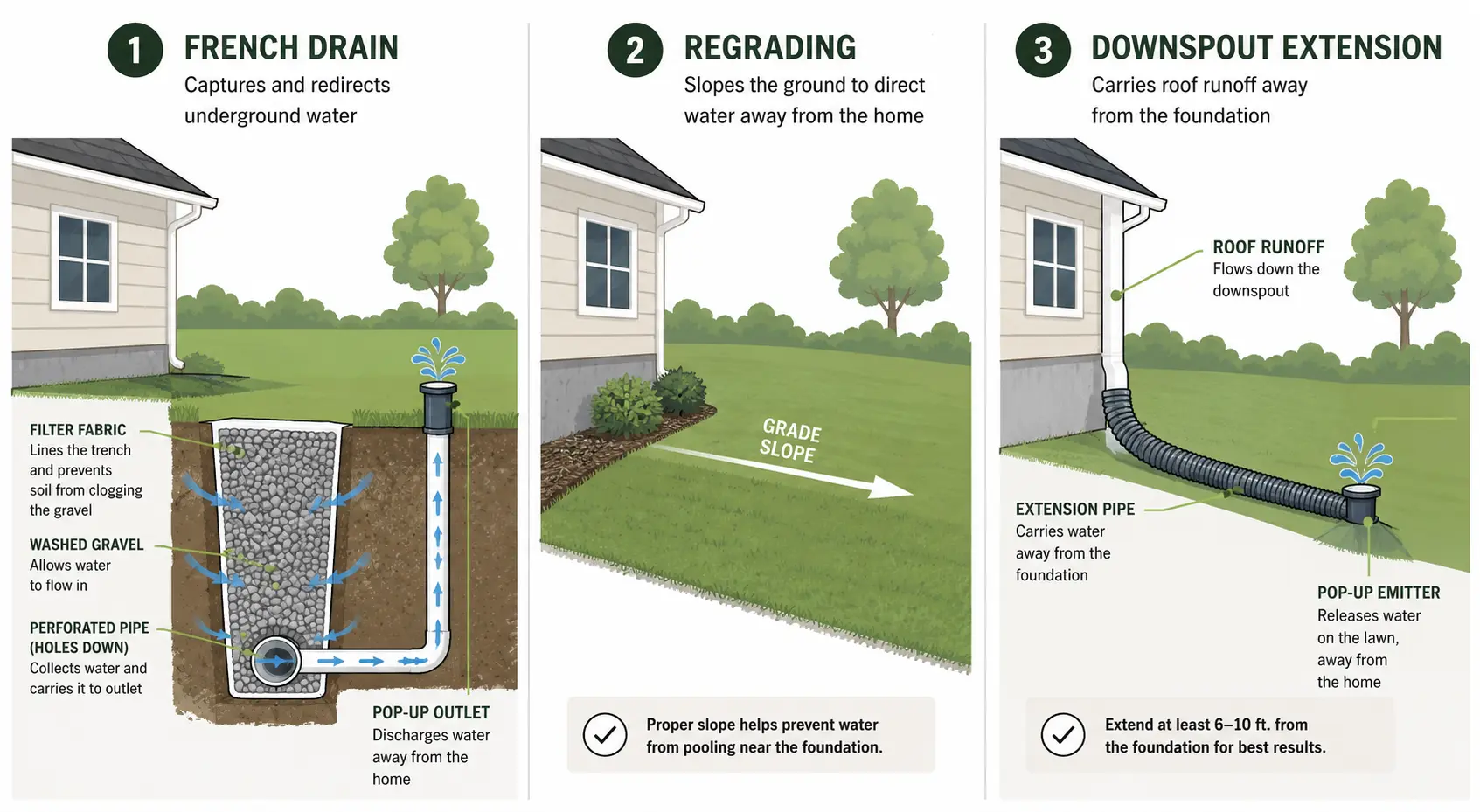
A rough guide, and the actual answer comes from standing in the yard:
| What you're seeing | Most likely fix |
|---|---|
| Puddle right at the downspout or foundation wall | Downspout extensions first |
| One shallow dip that holds water, rest of the yard drains | Localized regrading |
| Wide area stays soft for days; no obvious low spot | French drain |
| Water seeping toward a walkout or foundation edge | French drain, deeper section |
| Whole yard is flat and holds water everywhere | Grading plan; a drain alone won't do it |
| Water coming through a basement wall | Interior work — not our trade |
If it's pointing toward a drain, here's exactly what that involves: French drain installation in Overland Park.
Yard drainage questions
Why is my yard soggy days after it rains in Overland Park?
Usually because water is arriving faster than heavy clay soil can absorb it, and then has nowhere to drain to. Roof runoff, a flat or reverse grade near the house, and compacted soil all make it worse. If the same patch is wet after every storm, the cause is upstream of that patch — not the patch itself.
What's the cheapest way to fix a wet yard?
Start with downspouts. Getting roof water eight to ten feet away from the foundation is inexpensive and solves a surprising share of wet-yard complaints on its own. Next cheapest is correcting grade in one localized area. A French drain costs more than either, and it's the right answer when water keeps moving through the soil rather than just sitting in one shallow dip.
Will regrading fix standing water, or do I need a drain?
Regrading works when the problem is a surface shape — a low spot or a slope that runs the wrong way — and there's somewhere for water to go once you've reshaped it. It doesn't work when water is coming up through the soil, or when the whole yard is flat and there's no low ground to shed toward. Those are drain jobs.
Can standing water in the yard damage my foundation?
Water sitting against a foundation is worth taking seriously. Wet clay swells and dry clay shrinks, and that movement is hard on foundations over time; standing water also raises the pressure on basement walls and finds any weakness in them. It's a slow problem rather than an emergency, but it doesn't improve on its own.
Do you fix drainage without tearing up the whole lawn?
Yes — most yard drainage work is one trench line, not a rebuilt lawn. We keep the trench narrow, keep spoil on tarps, and restore the surface when we're done. Some jobs really do need broad regrading, and if yours is one of them we'll say so before you're surprised by it.
Tired of the same wet spot every spring?
Free estimate in Overland Park. We'll figure out where the water is coming from and quote the fix that actually matches it.