 Overland Park French Drains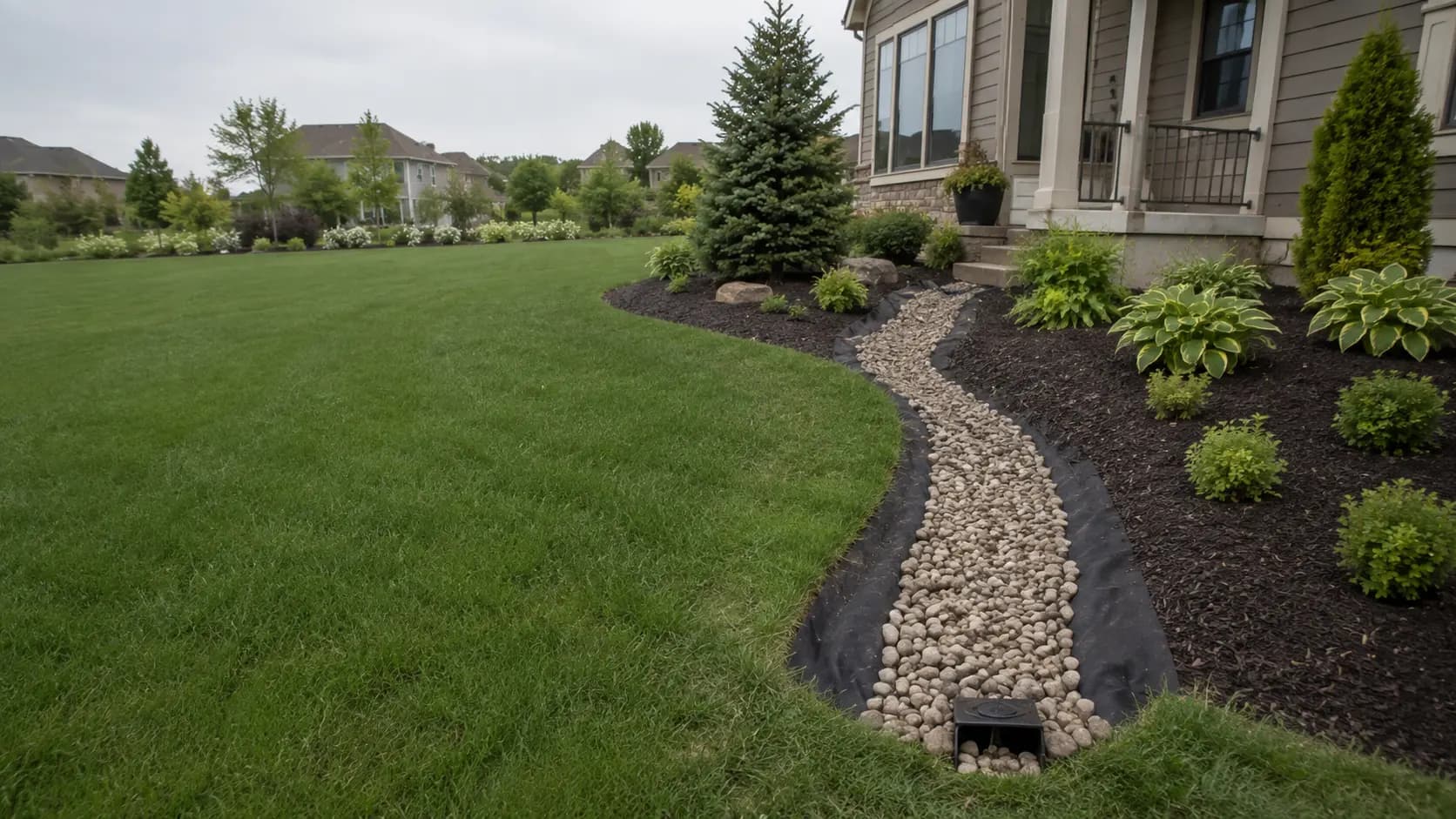
Landscape Drainage in Overland Park, KS
Water standing in beds, sitting behind a retaining wall, or pooling where the patio meets the lawn. These are drainage problems in the middle of landscaping you paid for — so the fix has to solve the water without wrecking the yard.
What is landscape drainage?
It's drainage work in the parts of the yard that are built rather than just grass — beds, walls, patios, walkways, side yards. The water behaves the same way it does anywhere else, but the constraints are different: there are plants worth keeping, hardscape that has to go back the way it was, and a finished look that matters to you.
Practically, that means more lifting and resetting and less open trenching. It also means the drainage often has to be part of the landscape rather than hidden under it — a dry creek bed instead of a buried line, a channel drain along the patio edge instead of a regrade.
Where landscape water shows up
Planting beds that stay saturated
Roof water lands in beds and edging traps it. We get the roof water out of the bed and give what's left a route away from the house — usually without pulling out established plants.
Behind retaining walls
Gravel backfill and a drain line behind the wall so hydrostatic pressure never gets a chance to build. Cheap insurance compared to rebuilding a wall that's started to lean.
Patio, walkway, and driveway edges
Hard surfaces shed everything they catch into whatever is next to them. A channel drain or a collection line at the edge takes that water somewhere useful instead of into the lawn or the garage.
Low corners and side yards
The narrow strip between houses collects water from two roofs and drains slowly. A drain line down the side yard is often the only practical fix.
Dry creek beds and swales
When surface water needs to cross the yard, a stone channel or a shaped swale moves it visibly and on purpose, instead of it choosing its own path across the lawn.
Downspout collection
Tying downspouts into buried lines that discharge well away from the house — the cheapest high-impact drainage work there is.
Water sitting in beds or at the patio edge?
Free estimate in Overland Park. We'll find a fix that handles the water without tearing up the landscaping you want to keep.
Is standing water in beds actually hurting anything?
Two things, mainly. Plants: most ornamentals want drainage, and roots sitting in saturated clay rot. If you keep replacing the same shrub in the same spot, the soil is telling you something. And the house: beds run along the foundation, so water collecting there is water collecting against your basement wall and the backfill soil that supports it.
Retaining walls are the case where it's structural rather than cosmetic. Saturated soil behind a wall weighs far more than drained soil, and walls are rarely built for that load. Drainage behind the wall is the difference between a wall that lasts and one that leans.
When the answer is a buried gravel-and-pipe system, the build is the same one described on our French drain installation in Overland Park page. If the wet ground is open lawn rather than landscaping, start with yard drainage in Overland Park.
Landscape drainage questions
Why does water pool in my planting beds?
Beds sit against the house, which is where roof water lands, and they're often edged or raised in a way that traps it. Add mulch that holds moisture and clay underneath that drains slowly, and a bed becomes a basin. Plants that hate wet roots are usually the first sign.
Do retaining walls need drainage behind them?
Yes. Water trapped behind a wall pushes on it, and that pressure is what makes walls lean, bulge, or fail. Gravel backfill and a drain line behind the wall let water out before it can build up. If you have a wall that's tipping forward, drainage is usually the reason.
Can you install drainage without redoing my landscaping?
Most of the time, yes. We route around established plantings where we can, lift and reset pavers or stone rather than replacing them, and keep the disturbed strip as narrow as the job allows. Some designs genuinely require opening up a bed — we'll show you which and let you decide.
What's a dry creek bed, and does it actually work?
It's a stone-lined channel that carries surface water along a visible route, often with a perforated pipe underneath. It works when the problem is surface runoff crossing the yard and there's fall to work with. It doesn't do much for water sitting in the soil — that's a French drain's job. Done well it handles water and looks intentional rather than industrial.
Water pools at the edge of my patio — what fixes that?
Depends on whether it's coming off the patio or coming up beside it. Runoff sheeting off a hard surface is usually solved with a channel drain at the edge or a small collection line taking it away. Water that wells up in the same spot after rain is groundwater, and that's a French drain. The fix is different, so it's worth identifying which one you have.
Water sitting where you'd rather it didn't?
Free estimate in Overland Park. We'll find a fix that handles the water and still looks like your yard afterward.